- A
- A
- A
- АБB
- АБB
- АБB
- А
- А
- А
- А
- А
Адрес: 119048, Москва,
ул. Усачёва, 6
тел. (495) 916-89-05
тел. (495) 772-95-90 *12725
Эл.почта: math@hse.ru
Учебный офис:
mathstudyoffice@hse.ru
тел. (495) 624-26-16
тел. (495) 772-95-90 *12713
ДПО факультета математики:
dpo-math@hse.ru
Проект «Математическая вертикаль»:
math.vertical@hse.ru
ЛМШ факультета математики - Летняя школа для школьников:
math.vertical@hse.ru

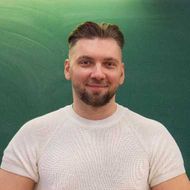
Редакторы сайта факультета:

Мини-курс по вторникам на английском языке. Лектор Гуосинь Ху / Guoqing Hu. AI Through the Lens of Mathematics: from Transformers to Scientific Machine Learning / Искусственный интеллект через призму математики: от трансформеров до научного машинного обучения
Tuesdays, 3 November–22 December 2026, 09:30–12:15 Moscow time. Online via Zoom, in English.
This course introduces the mathematical ideas behind modern AI and its applications in scientific computing. It connects linear algebra, probability, optimization and differential equations with the structure of neural networks and the way they learn from data. Topics include attention and Transformers, graph neural networks, diffusion models, physics-informed neural networks, neural operators and KANs.
Each lecture combines theory with practical work in Python/PyTorch. The emphasis is on the mathematical principles behind these models and the links between neural network design, function approximation, learned representations and scientific applications.
Prerequisites: Calculus, linear algebra, basic probability, and basic Python programming.
Lectures
- Optimization, approximation and generalization.
- Multilayer perceptrons and representation learning.
- Attention and Transformers.
- Graph neural networks.
- Diffusion models.
- Physics-informed neural networks for differential equations.
- Neural operators: learning mappings between function spaces.
- KANs, interpretability and AI for scientific discovery.
The proposed assessment combines participation, homework and programming assignments, and a final course project.
